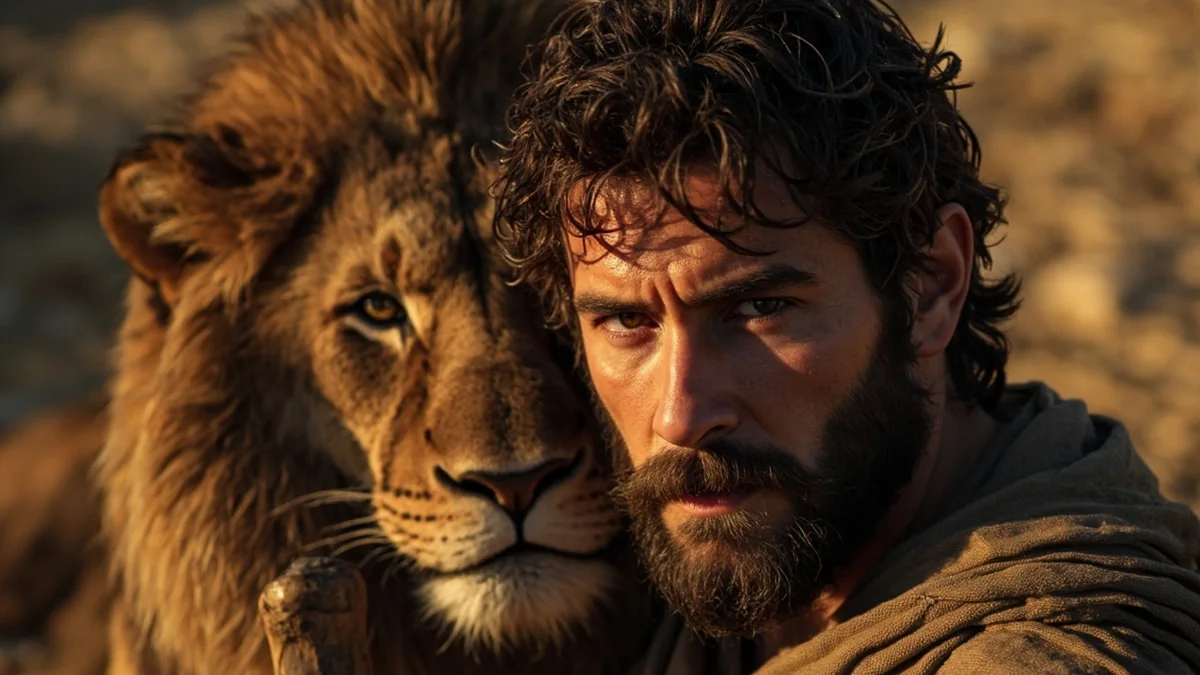
You know me by the twelve. The lion, the Hydra, the deer, the boar, the stables, the birds, the bull, the horses, the belt, the cattle, the apples, the dog. Children count them on their fingers. Nobody asks why I did them.
They were not adventures. They were a sentence. And I had earned it.
(Narrator's note: I speak as Herakles. The feelings and the scenes I paint are a literary rendering. The events, the sources and their disagreements are not — and where the ancients do not agree, I say so plainly.)
They hated me before I could breathe
My father was Zeus. My mother, Alcmene, was mortal. That was enough.
Hera did not hate me for anything I did. She hated me for something her husband did. Apollodorus writes that she sent two serpents into my cradle; I strangled them before I could speak. People tell it as an early proof of strength. To me it was the first night of a life in which something was always coming to find me.
I want to say it plainly, because it usually gets skipped: there was never a moment when Hera was not hunting me. Whatever you read about me, read it with that underneath.
The night I do not remember
I married Megara, daughter of Creon, in Thebes. We had children.
And one night, Hera sent madness into me.
I will not describe what happened. Apollodorus settles it in a few lines, and that is already far too much: in the madness I killed my children. My own children. With the same hands you admire on the statues.
When I came back to myself, there was nothing left to repair. There is no labour that returns a child.
I went to Delphi. Not for an oracle of glory — to be told what to do with the rest of my life. The Pythia sent me to Eurystheus, king of Mycenae: to serve him and to do whatever he commanded.
That is where the twelve begin. Not a challenge. A sentence I asked to be given.
They were not labours. They were penance.
The word you use, athlos, means a contest, a trial, a prize. It belongs in a stadium.
I did not walk into a stadium. I was sent.
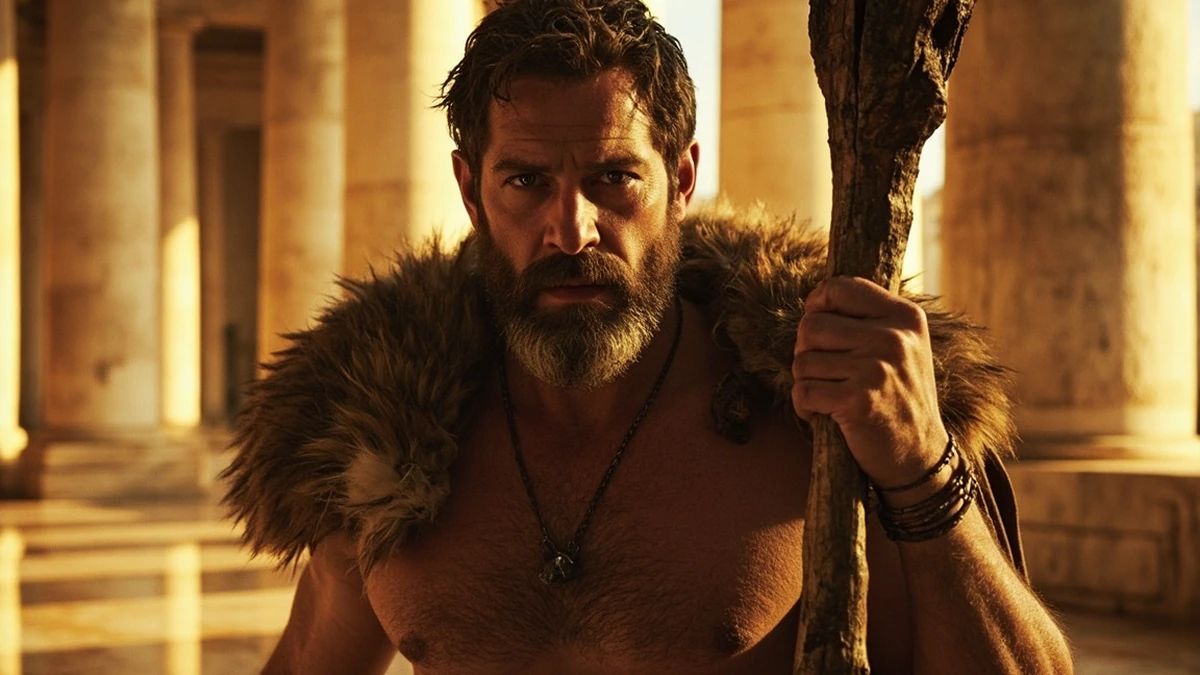 AI
AIAnd look at who was sending me. Eurystheus was a man so frightened of me that — Apollodorus says it, I am not inventing it — when I brought him the Erymanthian boar alive, he hid inside a storage jar. The strongest man in the world served the most cowardly.
That is not an irony of the story. That is the point of the punishment. The humiliation was part of it.
The sources disagree — and the disagreement matters
Here I have to be honest with you, because you have only been told half of it.
In Apollodorus, the order is the one I just gave you: first the madness and the killing, then the oracle, then the twelve as penance.
In Euripides, in Herakles, the order is reversed. There I have already finished the labours. I come home victorious, I even manage to save my wife and children from the tyrant Lycus — and then the madness descends and I kill them. In that play the catastrophe is explained by nothing that came before. There is no penance to follow. All that is left is Theseus, lifting me off the ground and talking me out of ending my own life.
Two poets. Two orders of events. Two entirely different men with the same name.
In one, the labours are an answer to something. In the other, there is no answer to anything.
I will not tell you which is right; I do not know either. I will only tell you that anyone who hands you one version as though it were the only one is keeping half of it from you.
The end did not come from a monster
I survived the lion. The Hydra. The dog that guards the dead.
A piece of clothing killed me.
Sophocles tells it in the Women of Trachis. Deianeira, my wife, was afraid I was leaving her for another woman. The centaur Nessus, dying from my arrow, had told her his blood was a love charm. It was a lie, and it was his revenge. She sent me a robe soaked in it. I put it on. It burned me from the inside.
She did not betray me. She loved me wrongly. When she understood what she had done, she hanged herself.
I died on Mount Oeta, on a pyre I asked to have built.
And afterwards? They do not agree there either
In the Odyssey, in book 11, Odysseus goes down among the dead and meets me. And the poet adds a strange clarification: what Odysseus sees is my phantom, while I myself am among the immortals.
Many scholars consider those lines a later addition — precisely because two traditions were fighting to fit inside the same poem: Herakles the dead hero, and Herakles the god.
In the tradition that won, I climb to Olympus. And there — this is the hardest part — I am reconciled with Hera.
I do not know how to explain that to you. I never digested it either.
If you keep one thing
I did not become strong in order to defeat monsters. I was strong from the beginning, and that strength destroyed everything I loved before I understood what I was doing.
The twelve were not my career. They were the price.
And they were not enough.
A note on sources: the twelve labours, the madness and the boar in the jar come from Apollodorus (Library, Book 2). The reversed order of events is from Euripides (Herakles). The death by the robe of Nessus is from Sophocles (Women of Trachis). The meeting in the underworld and the clarification about the phantom are in the Odyssey (book 11). The differing traditions are stated explicitly and are not presented as one.