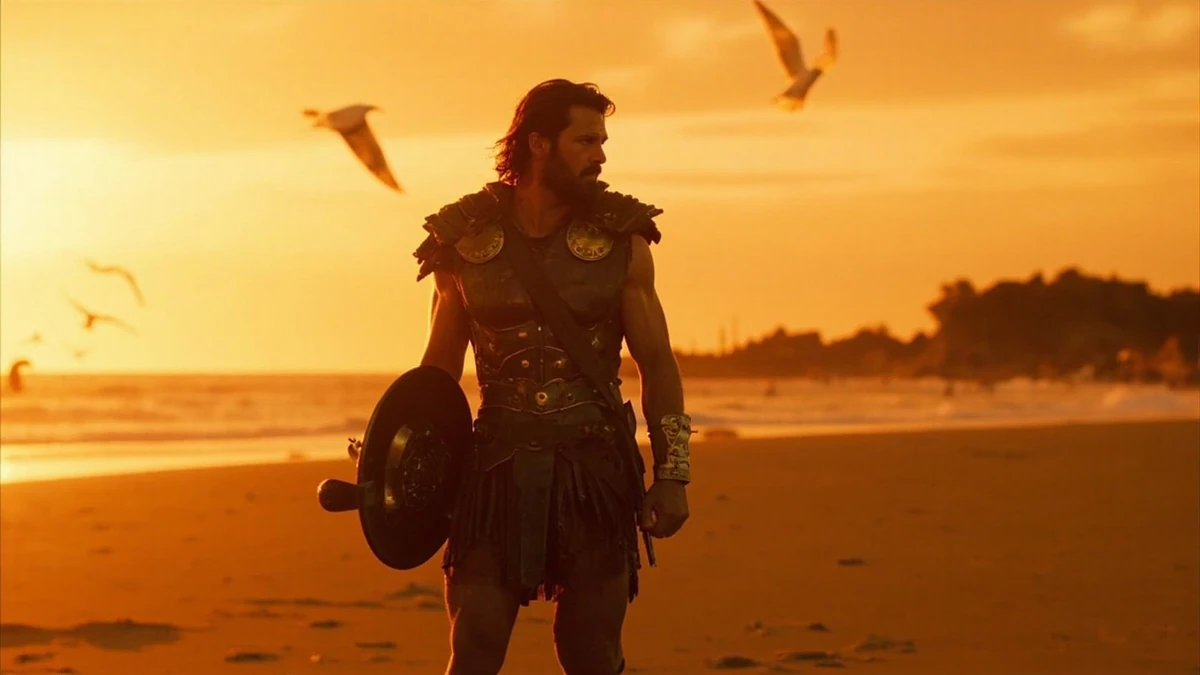
Narrator’s note: The voice is a first-person literary frame. Events supported by ancient sources are named by work and passage. Where I speak of thoughts, guilt, or remorse beyond the texts, that is dramatic interpretation.
I did not die because I was brave. That is the clean lie the living tell to endure their dead. I died because I chose glory, loved my name more than my years, and when insulted, let others pay the bill. If you want the Achilles of statues, look elsewhere. I will speak about mēnis — the rage with which the Iliad begins — and my voice in Hades, when glory no longer warmed anything.
The First Word Is Mēnis
The Iliad does not begin with my name as a wreath. It begins with a command to the Muse: “Sing the mēnis.” Sing the rage. Not the courage. The rage of Achilles, which brought countless sufferings upon the Achaeans and sent many souls of heroes down to Hades. That is what Iliad 1.1–7 says. If you want to understand me, do not pass quickly over it.
Agamemnon took Briseis from my shelter after he had first been forced to return Chryseis to her father, the priest of Apollo. He had been humiliated before the army and wanted compensation. That explains his act; it does not justify it. And his injustice does not acquit me.
In Iliad 1, Briseis is the visible prize of a deeper wound: honor, geras, public recognition. Our kings fought over who counted in front of other men. When he took my prize, I did not merely lose a captive woman. I lost the sign that the Achaeans knew what I was worth.
So I stopped fighting.
It Was Not Only Honor. It Was Ego.
I can dress it in words. I can say Agamemnon was arrogant, that his authority was unjust, that no commander has the right to humiliate his best fighter. All of that stands. But underneath it is something harder: I wanted them to learn my worth by losing me.
I asked my mother, Thetis, to beg Zeus to give victories to the Trojans, so the Achaeans would understand how much they needed me. This is not rumor; it is in Iliad 1.352–412, and Thetis’ appeal to Zeus follows at 1.493–530. I did not simply say, “I will not fight.” I allowed the war to tilt against my own side.
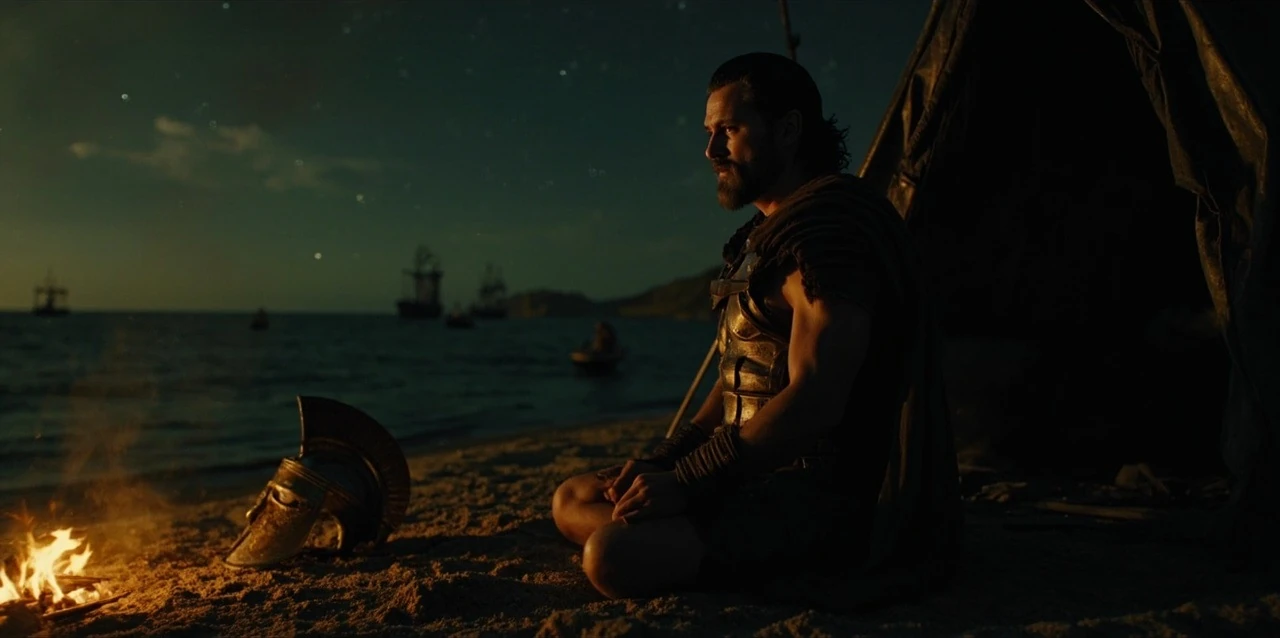
My companions were dying. The ships were close to burning. Men fell in the mud of Troy while I sat in my shelter and waited for my absence to be felt. I am not saying I killed every Achaean who fell while I was absent. I am saying something worse: I knew my absence was killing, and I kept it in place.
 AI
AIPatroclus Wore My Shadow
Patroclus was not a detail in my story. He was the man who entered my shelter when everyone else saw only anger. In Iliad 16, he begged to wear my armor and lead the Myrmidons from the ships. I did not give him myself. I gave him my outline.
 AI
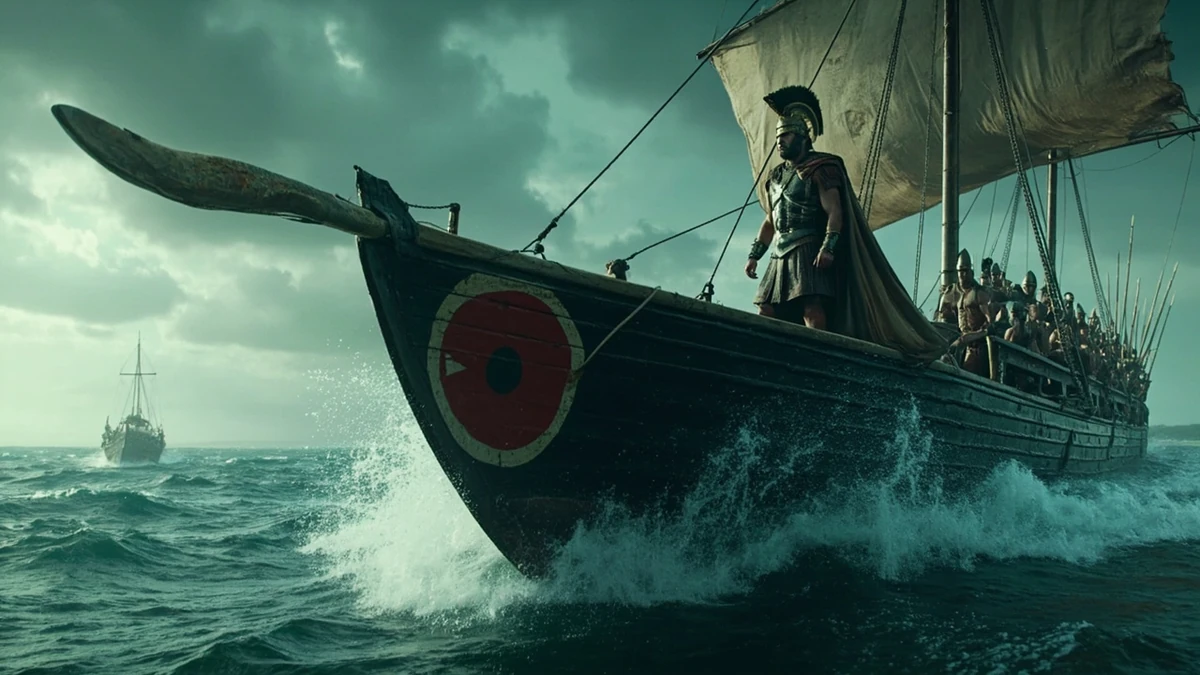
AIThere my rage became another man’s body. Patroclus wore my armor, the Trojans thought I had returned, and for a while the line held. Then he went farther than I had told him to go. Apollo struck him, Euphorbus wounded him, and Hector killed him — that is what Iliad 16 says. I do not need to remove anyone to see my own place.
If I had fought, Patroclus would not have worn my armor. If I had not made my honor more important than the army, he would not have needed to play Achilles. The sources do not make me say that sentence. I say it here as a dead man counting causes. His death did not make me better. It made me more terrible.
When I Returned, I Did Not Return Wise
When I returned to battle, I did not return for the Achaeans. I returned for Patroclus and for my own wound. In Iliad 18, Thetis brings me new armor from Hephaestus. In Iliad 19, I am formally reconciled with Agamemnon. But my soul was reconciled with nothing.
I slaughtered Trojans in Scamander. The river itself grew angry at the bodies, in Iliad 21. I tied Hector to my chariot and dragged his body around Troy after his death in Iliad 22. That was not justice. It was rage with a changed face: first absence, then presence.
Priam came to my shelter in Iliad 24. He kissed the hands that had killed his son and asked me for Hector’s body. There I remembered my father, Peleus. I wept with him. I gave him back his dead. That was human. It was not enough.
The Choice I Took Back
My mother had told me of two fates. If I remained at Troy, I would die young and my kleos would never perish. If I returned home, I would live a long life, but without glory. Iliad 9.410–416 says it plainly. I stayed.
People love that. They like the hero who trades years for song. It makes them feel death can be beaten if the name is heard loudly enough. I believed it first. I preferred to be brief and bright rather than long and unknown.
The Iliad does not narrate my death within its main body. Other traditions complete the end: Apollo and Paris are connected with my death, and Apollodorus, in the Library, Epitome 5.3–4, records the version in which Paris, with Apollo’s help, strikes me. I will not pretend all traditions are one. What is certain is enough: I did not return to Phthia. The long life remained unused.
Later, in Odyssey 11 — 11.488–491 — Odysseus finds me in the underworld and tries to comfort me. He says that while I lived I was honored like a god, and now I rule among the dead. Fine words. Words of a living man. I answered that I would rather be a living hired hand to a poor man with no land than king over all the dead. That is not some later remorse of mine invented here to move you. It is in Homer.
Listen to what it means. The man who chose short glory over long life, once he was dead, said he preferred the humblest life to the brightest rule in death. My rage cost lives. My choice cost my own. In the end I had no army measuring my honor, no prize, no armor. I had only the truth the dead learn too late: glory is the voice of other people. Life is your own breath.
I am not telling you this so you become wise. Humans are rarely saved by the confessions of the dead. I am telling you because my rage was once sung as greatness. It was greatness, yes. As great as a fire that cannot tell a friend’s shelter from an enemy’s.
Sources and Traditions
- Iliad 1.1–7 — the opening with Achilles’ mēnis and destructive consequences for the Achaeans.
- Iliad 1.101–244, 1.318–347 — conflict with Agamemnon and the taking of Briseis.
- Iliad 1.352–412, 1.493–530 — Achilles asks Thetis to intercede with Zeus for Trojan pressure.
- Iliad 9.410–416 — Achilles’ two fates: a short life with imperishable glory or a long life without kleos.
- Iliad 16, 18–19, 21–24 — Patroclus, Achilles’ return, Hector’s death, the abuse of the body, and its return to Priam.
- Odyssey 11.488–491 — the dead Achilles says he would rather be a living laborer for a poor man than king over the dead.
- Pseudo-Apollodorus, Library, Epitome 5.3–4 — later mythographic tradition for Achilles’ death by Paris with Apollo’s help.