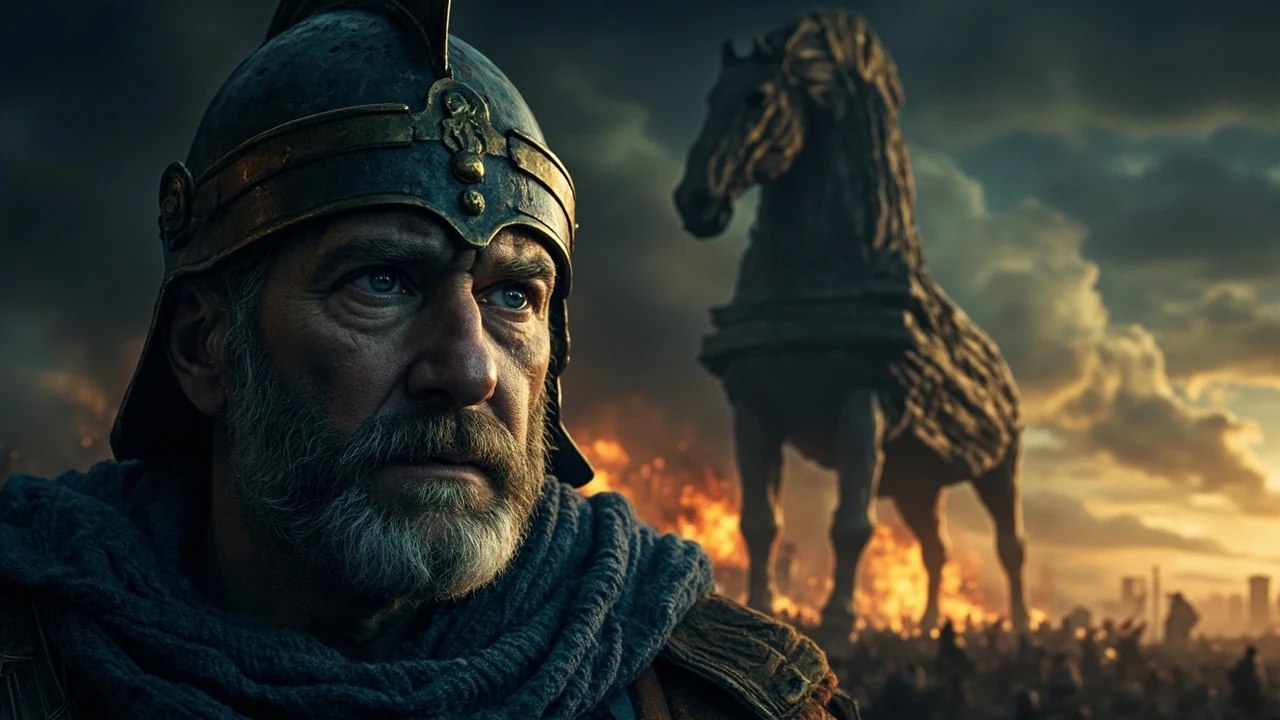
I spent ten years trapped between Achilles’ rage and Agamemnon’s crown. Honestly, the Trojans were not always our biggest problem.
My name is Odysseus: son of Laertes, king of Ithaca, husband of Penelope, and — according to people who once lost an argument with me — the most devious man ever to enter a military camp. I will accept “most inventive,” and nothing less.
I was there when the ships gathered, when Achilles abandoned the fighting, when Patroclus put on another man’s armour, and when a packed group of armed warriors discovered how loudly a person can breathe inside a wooden horse. What happened before I arrived, and what followed after I left, I learned from survivors, seers, and poets. The poets change a few details, usually when a better rhyme presents itself.
So here is the whole story of the Trojan War — not merely the few weeks covered by the Iliad, but the road from Eris’ apple to the ashes of Troy and our disastrous journeys home.
1. A Wedding, an Apple, and History’s Worst Beauty Contest
The poets say it began at the wedding of Peleus and Thetis, the future parents of Achilles. Every god was invited except Eris. Leaving the goddess of discord outside a celebration is rather like throwing a hot coal into a dry forest and expecting a thank-you note.
Eris tossed a golden apple among the guests, marked “for the fairest.” Hera, Athena, and Aphrodite immediately claimed it. Zeus was all-powerful, but not foolish enough to choose between them, so he passed the decision to Paris — also called Alexander — a prince of Troy who was then living as a shepherd on Mount Ida.
Each goddess offered him a gift. Hera promised power. Athena promised victory and mastery in war. Aphrodite promised the most beautiful woman in the world: Helen of Sparta. Paris chose Aphrodite. With one decision he gained a woman, two immortal enemies, and a ten-year war. Exceptional risk management.
The Cypria raises the stakes further. In its version, Zeus and Themis had already planned a great war that would lighten the earth’s burden of heroes. The apple may not have been the true beginning at all. It may have been only the spark for a fire the gods had already prepared.
2. Helen: Abduction, Elopement, or Divine Plot?
Helen was married to Menelaus, king of Sparta. Paris entered his palace as a guest. Menelaus welcomed and fed him, then left for Crete. While he was away, Paris and Helen sailed together, taking treasure with them.
The ancient sources disagree about what this meant. In the main epic tradition Aphrodite brings them together and Helen goes to Troy. Some storytellers stress abduction; others describe an elopement. Herodotus says that Helen was detained in Egypt and never reached Troy. Euripides later reshaped the Egyptian tradition: the real Helen remained there, while only a phantom went to Troy.
If you want one simple answer, I am sorry. Myths are not police statements. They are family stories retold for centuries, with every relative insisting that only their version is correct.
Menelaus returned to find an empty bed, depleted treasure, and a complete violation of sacred hospitality. He went to his brother Agamemnon, king of Mycenae. Then an old oath came into force: Helen’s former suitors had sworn to defend the husband she chose. I was one of them.
3. How I Tried to Avoid the War — and Failed Spectacularly
I did not want to go. I had a kingdom, a wife, and a newborn son. So I pretended to be insane, yoked an ox and a horse together, and began ploughing the shore while sowing salt. It was a respectable performance until Palamedes arrived.
He placed little Telemachus in front of the plough. I stopped at once. A father’s love proved my sanity, and my sanity sent me to Troy.
I will not lie to you about what followed. Later traditions say I took revenge on Palamedes by planting false evidence of treason that led to his death. It is not the most glorious page of my life. Cleverness without restraint is not wisdom. It is merely a sharp knife in an angry hand.
The rulers gathered at Aulis. The catalogues disagree on the exact number, but we are talking about more than a thousand ships, dozens of kings, and countless men who believed they would return quickly. Agamemnon held supreme command. Achilles had the Myrmidons and the reputation. I had twelve ships and the disturbing sense that nobody had thought seriously about supplies.
4. First, We Invaded the Wrong Country
The fleet sailed without knowing the route precisely. We reached Mysia, attacked it, and only then learned it was not Troy. I would like to say this was our worst plan. Unfortunately, it was merely the first.
King Telephus fought us and was wounded by Achilles’ spear. An oracle declared that only the thing that had harmed him could heal him. We scraped rust from that same spear into the wound; Telephus recovered and later showed us the proper route to Troy. In the heroic age, even medicine had a sense of irony.
A storm scattered the fleet and the leaders returned home. In one tradition, eight years passed before we assembled again. This is why some ancient chronographers counted twenty years from Helen’s departure to the end — not ten. The famous “ten-year war” refers to the final expedition and siege.
5. Iphigenia and the Price Paid at Aulis
At our second gathering in Aulis, the winds stopped. Calchas the seer said Artemis was angry with Agamemnon and demanded the sacrifice of his daughter Iphigenia. Agamemnon lured her there with the lie that she was to marry Achilles.
The traditions give different endings. In the Cypria summary and Pseudo-Apollodorus, Artemis takes Iphigenia away and substitutes a deer. The surviving tragedies do not present one identical version: Aeschylus treats her as sacrificed, while the transmitted ending of Euripides’ Iphigenia at Aulis reports a deer substitution. What remains consistent is that Agamemnon placed the expedition above his daughter — a decision Clytemnestra never forgot.
We gained a wind. He gained the beginning of his own destruction.
6. Philoctetes, Protesilaus, and the First Payment on the Bill
At Tenedos a snake bit Philoctetes. The wound became infected and the smell unbearable. On Agamemnon’s orders, we abandoned him on Lemnos with the bow of Herakles. Yes, I was one of the men who carried out the decision. Yes, years later I had to return and beg him to save us. The gods enjoy irony even more than poets do.
Before battle, Menelaus and I entered Troy as envoys and demanded Helen and the treasure back. The Trojans refused. Antenor protected us from those who wanted us killed. The last diplomatic door closed.
An oracle said that the first Achaean to step onto Trojan soil would also be the first to die. Protesilaus leapt from his ship and was killed by a Trojan; a later tradition names Hector. That is how the siege began: not with music and banners, but with a prophecy fulfilled before our sandals had dried.
7. The Nine Years the Iliad Barely Mentions
Let us correct a famous misunderstanding: the Iliad does not tell the whole Trojan War. It covers a few weeks in the tenth year and ends with Hector’s funeral — before Achilles dies and long before the Wooden Horse.
During the earlier years we were not simply sitting outside the walls. We raided the cities and countryside around Troy, cut off its allies and supplies, captured people, and seized wealth. Achilles took Lyrnessus and other towns. Among the captives he received Briseis, while Agamemnon took Chryseis.
If that sounds less like a glorious expedition and more like systematic devastation, you are listening correctly. The poets gave us shining epithets. The fires, however, burned for real.
8. Achilles Against Agamemnon — with Everyone Else in the Middle
Chryseis’ father, a priest of Apollo, asked for his daughter back. Agamemnon refused, and Apollo sent a plague through the camp. When Agamemnon was forced to release Chryseis, he seized Briseis from Achilles so that, as he put it, he would not be left “without a prize of honour.”
Achilles had two settings: divine greatness and catastrophic offence. He withdrew from battle and asked his mother Thetis to persuade Zeus to grant the Trojans temporary victory. Agamemnon, meanwhile, called it “leadership” when the rest of us called it “do exactly what I say and thank me for it.”
The Trojans came out from behind their walls. Paris fought Menelaus in single combat and was losing until Aphrodite carried him away. The truce was broken by Pandarus’ arrow. Diomedes wounded even Aphrodite and Ares. Hector returned briefly inside the city and said farewell to Andromache and their small son Astyanax. He understood what might happen, and still went back to the fighting.
When our situation became desperate, Ajax, Phoenix, and I went as an embassy to Achilles’ shelter. We offered gifts, honour, and the return of Briseis. He refused. No argument passes easily through the armour of a wounded ego.
9. Patroclus Wears the Armour He Should Never Have Worn
The Trojans broke through our camp wall and set one ship on fire. Then Patroclus begged Achilles to lend him his armour and the Myrmidons. He would drive the Trojans from the ships and return.
He did the first. He did not do the second.
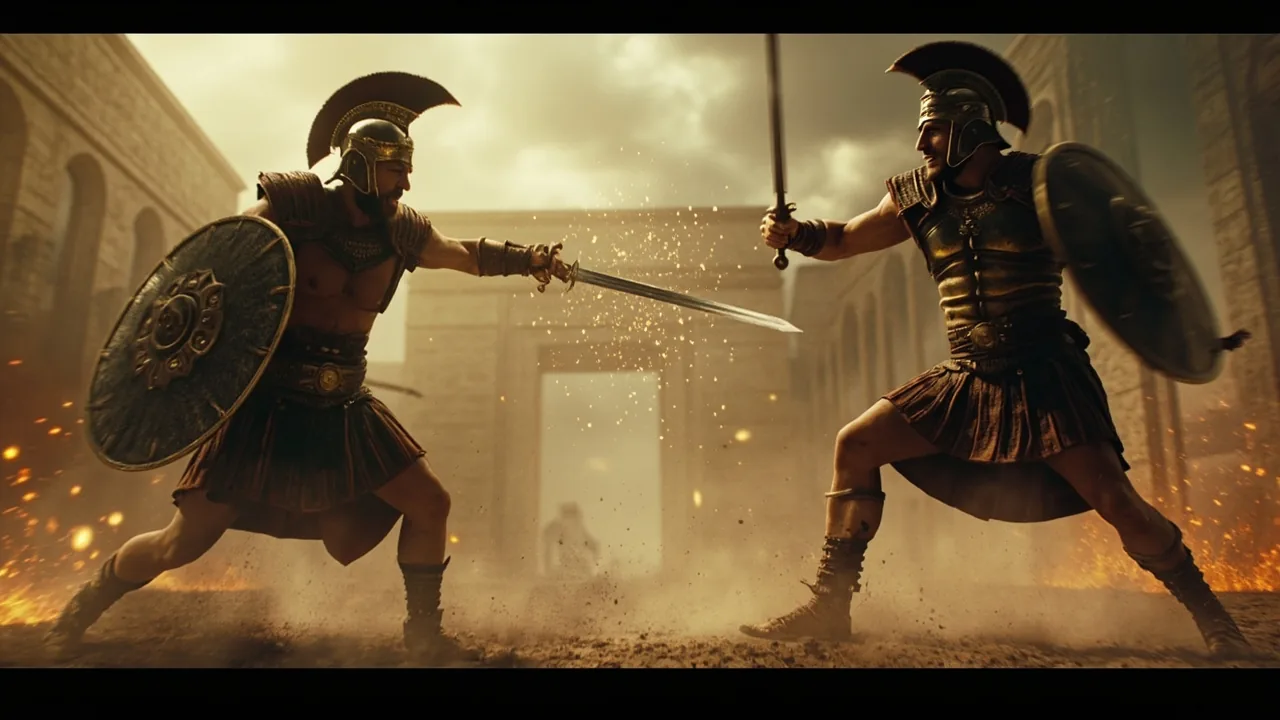
The Trojans, believing Achilles had returned, fell back. Patroclus killed Sarpedon, son of Zeus, and advanced as far as the walls. Apollo struck him and stripped away the armour, Euphorbus wounded him, and Hector delivered the final blow.
His death shattered Achilles. Thetis brought new armour made by Hephaestus, including the famous shield upon which an entire world was fashioned. Achilles reconciled with Agamemnon, not because the old insult had ceased to matter, but because grief had become stronger than rage.
 AI
AIAI-generated illustration
10. Hector, Priam, and the Moment War Became Human
Achilles returned to battle like a wildfire. He killed so many Trojans in the River Scamander that, in the myth, even the river rose against him. At last he faced Hector outside the Scaean Gates.
Hector ran three times around the walls before standing to fight. Achilles killed him, pierced his ankles, and dragged the body behind his chariot. Victory did not bring Patroclus back. It only gave Achilles room for greater brutality.
Then old Priam entered our camp at night. He knelt before the man who had killed his son and kissed his hands. He asked for Hector’s body. For a little while, king and killer wept together for those they had lost.
That is the final great action of the Iliad. Not the Horse. Not the fall of Troy. A father begs for his child’s body, and an enemy remembers that he is human.
11. After the Iliad: an Amazon, Memnon, and the End of Achilles
After Hector’s burial, Penthesilea came to Troy. She was queen of the Amazons and daughter of Ares. She fought bravely, but Achilles killed her. Then came Memnon, son of Dawn, wearing armour made by Hephaestus. He killed Antilochus, Nestor’s beloved son, and was in turn killed by Achilles.
Finally Achilles pursued the Trojans toward the city. In the Aethiopis tradition, Paris and Apollo brought him down, and our greatest warrior fell.
One necessary correction: the Iliad does not narrate Achilles’ death, and it never says that every part of him was invulnerable except his heel. The early epic tradition connects his death to Paris and Apollo, often near the Scaean Gates. The famous “Achilles’ heel” is a later development of the myth.
Ajax carried his body out of the fighting while I held back the Trojans. At his funeral we mingled his bones with those of Patroclus. Even in death, the two were not separated.
12. The Arms of Achilles and the Fall of Ajax
The divine arms of Achilles were offered as a prize to the greatest surviving warrior. Ajax and I both claimed them. He had carried the body; I had kept the enemy away. With Athena’s support, the judges chose me.
Ajax took the decision as an unbearable humiliation. Athena clouded his mind, and he slaughtered livestock while believing he was killing the Achaean leaders. When his sanity returned and he understood what he had done, he fell upon his sword.
I won the armour and lost one of our strongest companions. Some victories cannot bear to be looked at.
13. Three Keys to an Unconquered City
Ten years had passed, and Troy still stood. Then we captured Helenus, a seer and son of Priam. The post-Homeric traditions do not give one universally agreed checklist; they preserve overlapping conditions for Troy’s fall.
Among them were the return of Philoctetes with the bow of Herakles, the arrival of Neoptolemus, son of Achilles, and the removal of the Palladium, the sacred image of Athena that protected Troy.
I returned to Lemnos for the man we had abandoned. Philoctetes had every reason to hate us. In the end he came, was healed, and killed Paris with the arrows of Herakles.
I also brought young Neoptolemus from Scyros and gave him his father’s armour. Then I entered Troy disguised as a beggar. Helen recognised me but did not betray me. Later, Diomedes and I stole the Palladium — although the sources disagree even here over which image we took and which man assisted the other.
The supernatural locks were broken. The walls still remained.
 AI
AIAI-generated illustration
14. The Horse That Should Never Have Passed Through the Gate
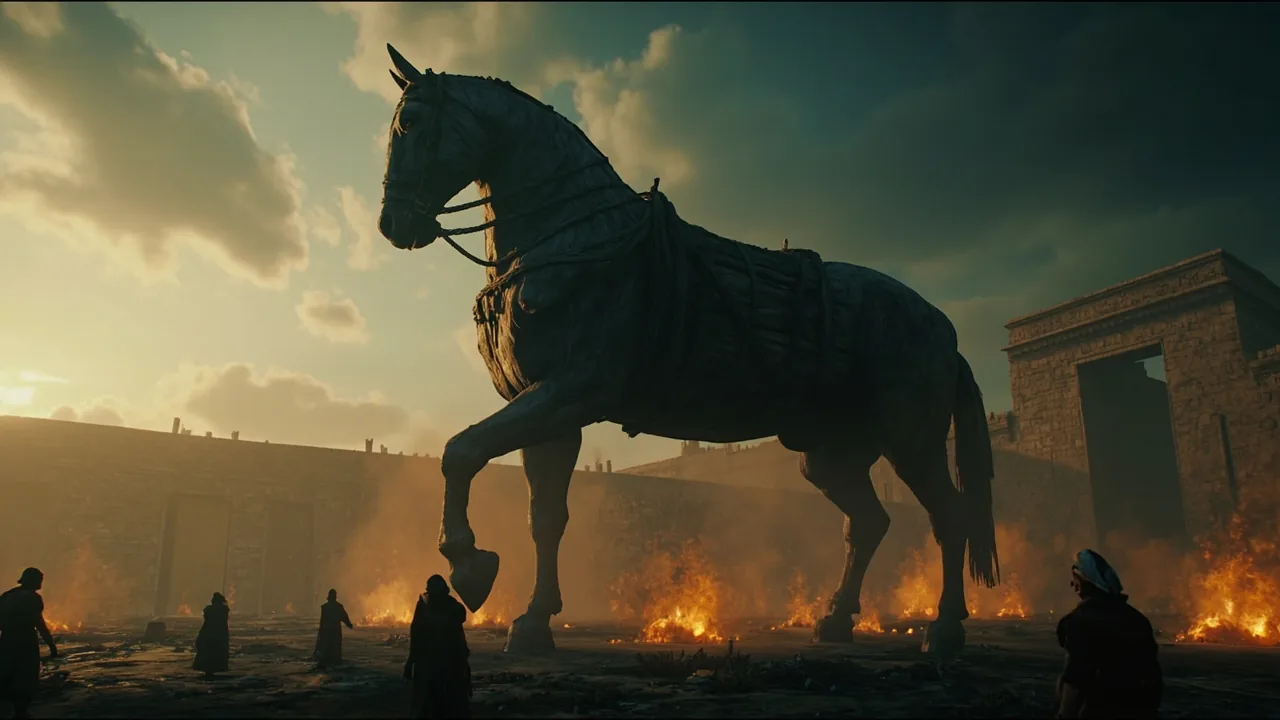
The idea was simple only when spoken quickly: we would build a gigantic wooden horse, hide our best warriors inside, burn the camp, and send the fleet away as if we had surrendered. The Trojans would carry the ambush into their own city.
Epeius built the Horse under Athena’s direction. The number of men inside changes from source to source. Let us say only that there were more of us than could comfortably fit in a wooden object with no windows.
Sinon remained behind to convince the Trojans that the Horse was a sacred offering and to give the signal that night. Our fleet hid at Tenedos. Cassandra warned that armed men were concealed within it. Laocoön demanded its destruction. In the summary of the Greek Sack of Ilium, the serpents kill Laocoön and one son; in Virgil’s famous later account, Laocoön and both sons die. In Virgil’s narrative, the Trojans read the disaster as proof that the Horse was sacred.
It was not the first time human beings ignored two correct warnings because one lie felt more pleasant.
The Trojans broke down part of their own wall to bring the Horse inside, then celebrated their victory. We waited within.
At one point Helen walked around the Horse and imitated the voices of our wives. One of the men, Anticlus, was about to answer. I closed his mouth with my hands until she went away. Strategy sometimes means knowing when not to speak.
 AI
AIAI-generated illustration
15. The Night Troy Fell
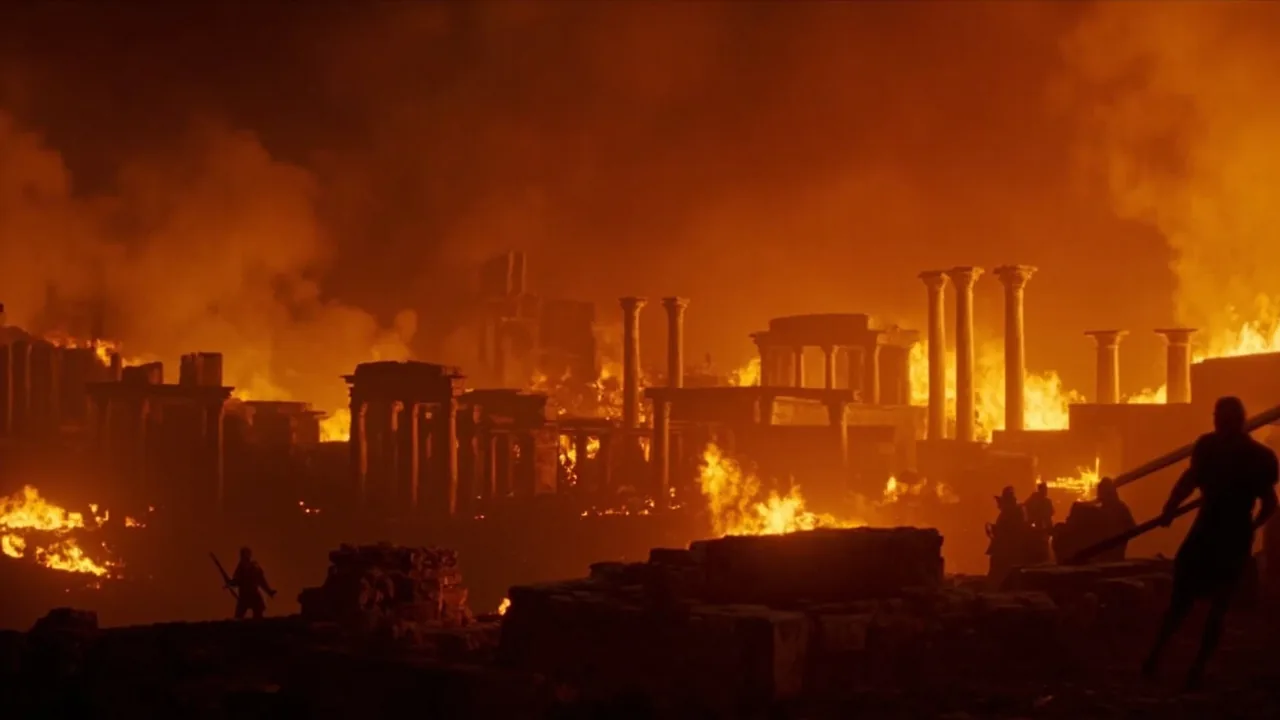
When the city slept, Sinon raised the torch. The fleet returned from Tenedos. We opened the Horse, climbed down by rope, killed the guards, and opened the gates.
What followed was not a glorious battle, but a massacre in darkness. Neoptolemus killed old Priam near the altar of Zeus. Menelaus killed Deiphobus and recovered Helen. Ajax the Lesser violently dragged Cassandra away while she clung to Athena’s image, a sacrilege our fleet would pay for. Astyanax, the child of Hector and Andromache, was thrown from the walls; traditions variously place responsibility on Neoptolemus, on me, or on a collective Greek decision. Polyxena was sacrificed at Achilles’ tomb. The women were divided as spoils. The city burned.
I will not hide behind the word “victory.” We won the war and failed in many of the things that make a man worthy of returning home.
In the Odyssey, Homer has Demodocus sing of Troy’s destruction while I weep in secret. He compares me to a woman mourning her husband as the victors drag her into slavery. That is the true ending of Troy: the victor hears the song of his own triumph and recognises within it the suffering of the defeated.
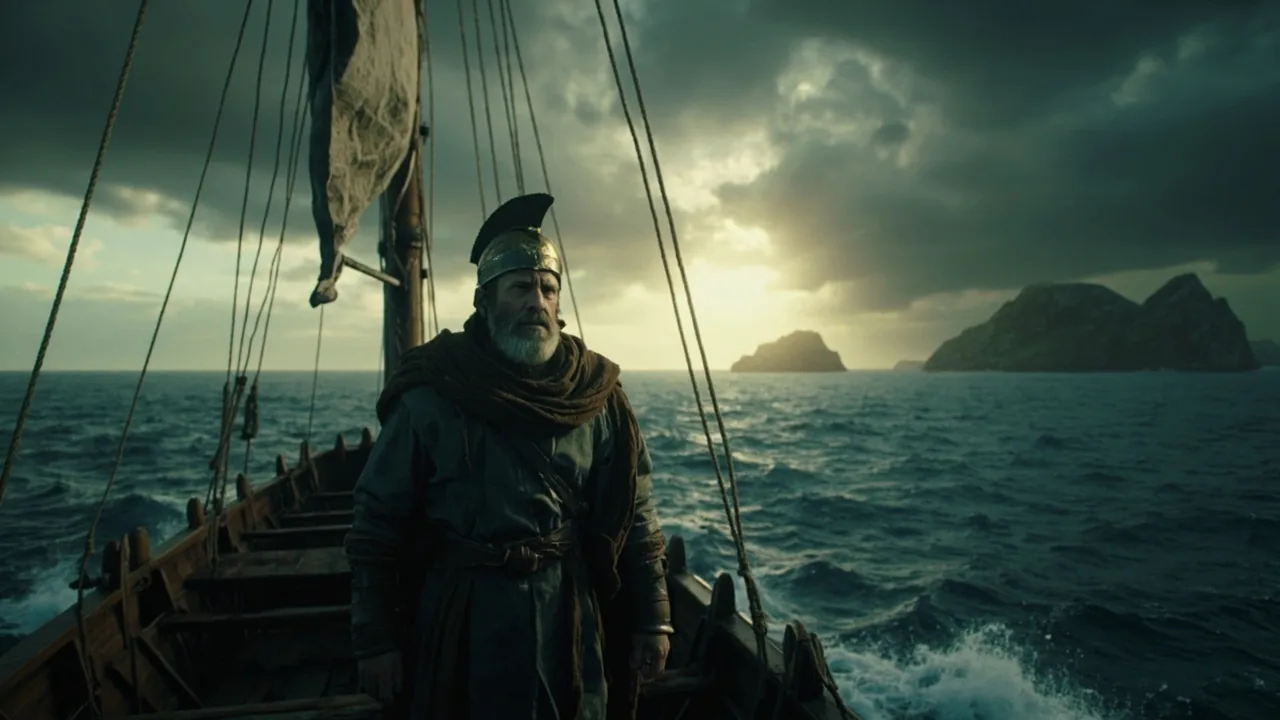 AI
AIAI-generated illustration
16. The Returns: the Gods Sent Us the Bill
Athena was furious over Ajax’s sacrilege. Before we sailed, Agamemnon and Menelaus quarrelled over whether we should wait and appease her. Even after ten years, the sons of Atreus could turn a departure into an administrative crisis.
Nestor and Diomedes reached home safely. Menelaus wandered for years and travelled as far as Egypt. Ajax the Lesser was shipwrecked and lost. Agamemnon returned to Mycenae and was murdered. The traditions distribute the guilt differently: Homeric epic foregrounds Aegisthus, while Aeschylus places the killing in Clytemnestra’s hands — the wife who remembered Iphigenia, the Cassandra he brought home, and all the years of absence.
I needed ten more years to see Ithaca. I lost every ship and every companion. I met a Cyclops, witches, the dead, monsters, and a sea god who maintains a grudge with professional consistency. But that is another story.
The war that began to bring one woman home prevented thousands of people from ever reaching theirs.
17. Did the Trojan War Really Happen?
Troy was a real place. At Hisarlık in modern Turkey, archaeologists have found many successive cities, built and destroyed one above another. Some Late Bronze Age layers show formidable fortifications and violent destruction, while Hittite texts refer to places and powers that many scholars connect with Troy and the Achaeans.
That does not prove that a particular Achilles killed a particular Hector, or that a wooden horse crossed the gate. It is more likely that real conflicts, commercial rivalries, and destroyed cities merged through centuries of oral poetry. Archaeology gives us a city and a historical horizon. Epic tradition gives us characters, motives, gods, and meaning.
The honest answer is this: one or more real wars may lie behind the myth. We cannot prove that they happened exactly as Homer’s poetry describes.
18. Who Won?
The Achaeans captured Troy. That is what the scoreboard says.
But Achilles, Patroclus, Ajax, and countless others never returned. Agamemnon was murdered at home. Menelaus wandered. I lost my entire crew and nearly lost the memory of my own name. The Trojans lost their city, their men, their children, and their freedom.
Achilles chose a short life and everlasting glory. Hector chose to stand before his city while knowing he might fall. Priam chose to kneel before his son’s killer. Andromache, Hecuba, and Cassandra were not given the luxury of choosing.
And me? I chose a wooden horse and won a war I could never remember without weeping.
If you want a lesson from a man famous for tricks, keep this one: cleverness can open even the gates of Troy. It cannot promise that you will like the person you become after walking through them.
A Note on the Sources
No single surviving ancient work tells the entire Trojan War. The Iliad covers a short period in the tenth year. The events before and after it come from the Odyssey, surviving summaries and fragments of the Epic Cycle, Apollodorus, tragedy, and later poets. When traditions conflict — over Helen, Iphigenia, the Palladium, Laocoön, or the death of Astyanax — this article acknowledges the disagreement rather than disguising one version as certainty.
Principal Ancient Sources
- Homer, Iliad, Books 1, 3, 5–6, 9, 16, 18, and 21–24.
- Homer, Odyssey 4.235–289, 8.487–521, and 11.385–537.
- The Cypria, Aethiopis, Little Iliad, Sack of Ilium, and Returns, through Proclus’ summaries and surviving fragments of the Epic Cycle.
- Pseudo-Apollodorus, Epitome 3–6.
- Sophocles, Ajax and Philoctetes.
- Euripides, Iphigenia at Aulis, Helen, Trojan Women, and Hecuba.
- Herodotus, Histories 2.112–120, for the Egyptian Helen tradition.
- Quintus Smyrnaeus, Posthomerica.
- Virgil, Aeneid 2, as a later Roman account of Troy’s fall and Laocoön.